

US and NATO must reverse strategy of surrender with Ukraine
President Biden’s speech in Poland this weekend followed the same song sheet that his administration and NATO have been singing from for the duration of the Russian invasion of Ukraine. The U.S. has a long tradition of defending democracy across the globe, and it is unconscionable for us to cede ground to a tyrant who represents every principle we have opposed since our founding nearly two and a half centuries ago.

VIDEO: Rear Admiral Tim Gallaudet USN (Ret.) On: Holding Fast in Heavy Seas with John R. Miles
John R. Miles of PassionStruck talks ‘holding fast in heavy seas’ and navigating turbulent times with our CEO RDML Tim Gallaudet. They discuss Gallaudet's experience at the U.S. Naval Academy, what it means to be the Oceanographer of the U.S. Navy, his experience leading the National Oceanic and Atmospheric Administration (NOAA), the importance of the Blue Ocean Economy initiative, and more.
The US needs open ocean data to avoid an innovation wipeout
The last decade has seen a surge of activity and interest involving the world’s oceans. The common denominator in all of this ocean activity is data. These developments have happened so swiftly that we are approaching a point of potential ocean data inundation.
Include seafood in the sanctions to squeeze Putin
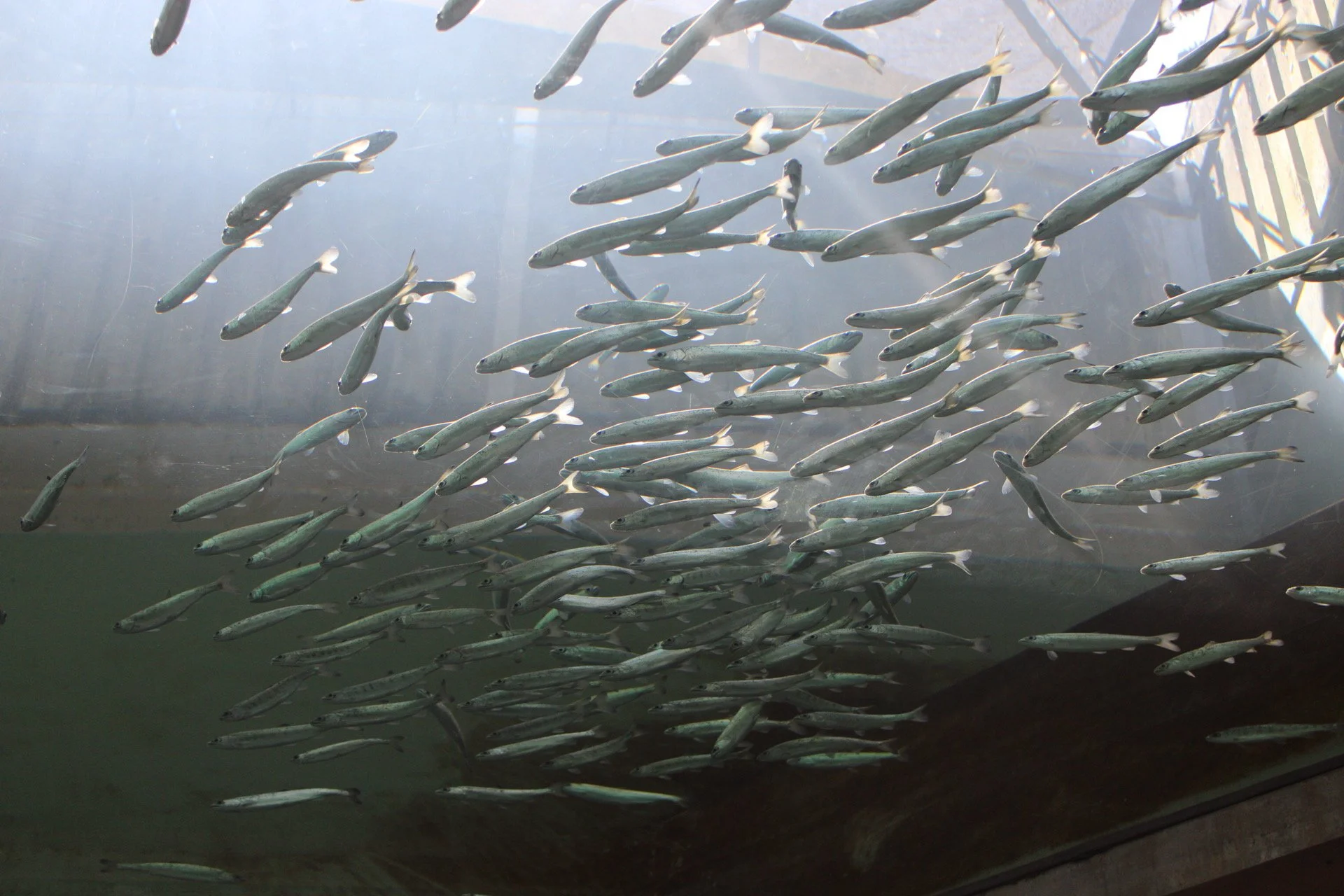
Russian President Vladimir Putin’s brutal attack on Ukraine demands a comprehensive counterpunch from the West that will have an immediate and crippling effect on his country. One action that can simultaneously advance the American Blue Economy and create difficulty for Putin is to ban Russian seafood imports.

Three Ways the Navy Can Surge Its Unmanned Surface Force
Building on nearly a century of experience with unmanned systems (UxS), the U.S. Navy is moving forward to realize the vision articulated by Chief of Naval Operations (CNO) Admiral Mike Gilday. The glaring exception is the Navy's Surface Force.
New Podcast Episode | The Amazing Workforce Development Potential of the American Blue Economy
In this month's episode of the American Blue Economy Podcast, our host Rear Admiral Tim Gallaudet explores Blue Economy Workforce Development. Tune in for key insights and examples about developing the next generation of blue tech professionals to support a thriving ocean economy.


Without better space weather information, America's space aspirations will be grounded (The Hill)
A critical component of American ascendancy in space is the ability to monitor and predict space weather. The problem is that we are failing to advance our space-weather capabilities at the pace of the rest of the American space sector.

Radio | Balance Of Power: U.S. Sea Level To Rise by 2050 (Bloomberg)
Retired Rear Admiral Timothy Gallaudet, former Acting Administrator of NOAA discusses climate risk and a new report that shows the sea level along the U.S. Coast will rise by a full foot by 2050. He spoke with Bloomberg's David Westin.

Time to follow through on NOAA's marine conservation and the blue economy plan
Policy regarding marine conservation has tended to focus on the need to balance the protection of marine natural resources with the economic returns from ocean activities such as large scale commercial fishing, offshore energy and shipping…

Former NOAA Deputy Administrator, Tim Gallaudet, joins Xona Advisory Board (Xona press release)
Xona Space Systems, the aerospace startup developing a LEO satellite navigation constellation, is excited to announce the addition of Rear Admiral Tim Gallaudet, PhD, US Navy (ret) to its advisory board.

Country first: We need to elect leaders who put principles before party (The Hill)
As we approach the anniversary of the Jan. 6, 2021 attack on the U.S. Capitol, I am reminded of the frequent warnings issued in a series of op-eds and interviews by one of the most principled and respected leaders of our time…

Over 80 percent of Earth's oceans remain unexplored — the US can step up (The Hill)
While the U.S. has been a leader in space exploration, including investing billions of dollars to achieve a set of national priorities, there are many great unknowns on Earth where we can step up similar efforts.

Extreme weather demands warp-speed government-private sector response (Washington Post)
It has happened again. Yet another devastating weather event — this time the deadliest December tornado outbreak on record, and probably one of the top 10 deadliest for any month — has reminded us that we’ve entered a new era of environmental extremes.

Opinion: A Call for the USNS Walter Munk to Honor America’s Greatest Oceanographer
The USNS Maury is an asset of the Naval Meteorology and Oceanography Command (NMOC), which I led from 2014-2017…I agree with others who have called it disgraceful for any military unit to be named after someone who fought against our government to maintain a system that enslaved other human beings.

Making the Military Climate-Ready for What Truly Matters — Modern Warfighting
Secretary of Defense Lloyd Austin has expressed his commitment to include climate considerations as an essential element of our national security. This is not new to the DoD, and the recently released DoD Climate Adaptation Plan details the intended efforts by the Department to make the military more climate-ready.

Three Missed Climate Adaptation Opportunities
A major announcement from the 2021 UN Climate Conference was the first U.S. Adaptation Communication under the Paris Agreement. Climate adaptation is important because it will help us prepare for and mitigate the impacts of heat waves, extreme precipitation, wildfires, and water scarcity.
Without Agile Programs, the Private Sector and Partnerships, the Navy’s Unmanned Future Will Founder
Earlier this year, the Department of the Navy released its Unmanned Campaign Framework (also referred to as the Unmanned Campaign Plan) to serve as the comprehensive strategy for realizing a future where unmanned systems serve as an integral part of the Navy’s warfighting team.

America’s Soft Power Secret Weapon Against China – The Environment
Our leadership in environmental quality, conservation, and science provides a powerful counterweight to China’s increasingly malign influence and has made the U.S. a preferred partner over the People’s Republic of China in view of its extensive environmental abuses.

Sub Snub: Lafayette Would Have Lamented Such a Huge Strategic Misstep
This was the first time in our alliance with France, dating back to 1778, that an ambassador was recalled to Paris. The question is not, “Was the deal worth alienating our oldest ally?” Rather, “Why did the U.S. not seek to avert such a huge strategic misstep?”